
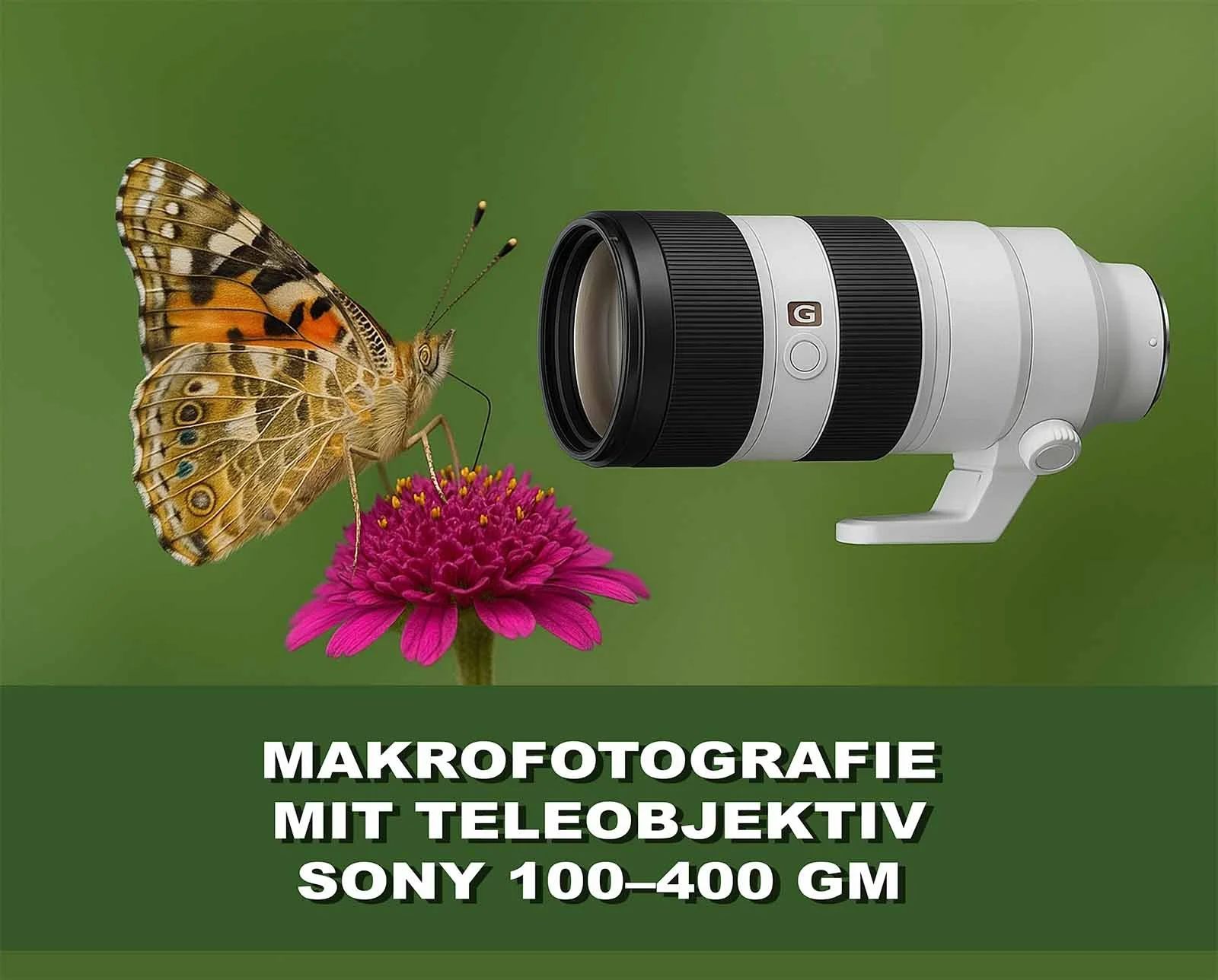
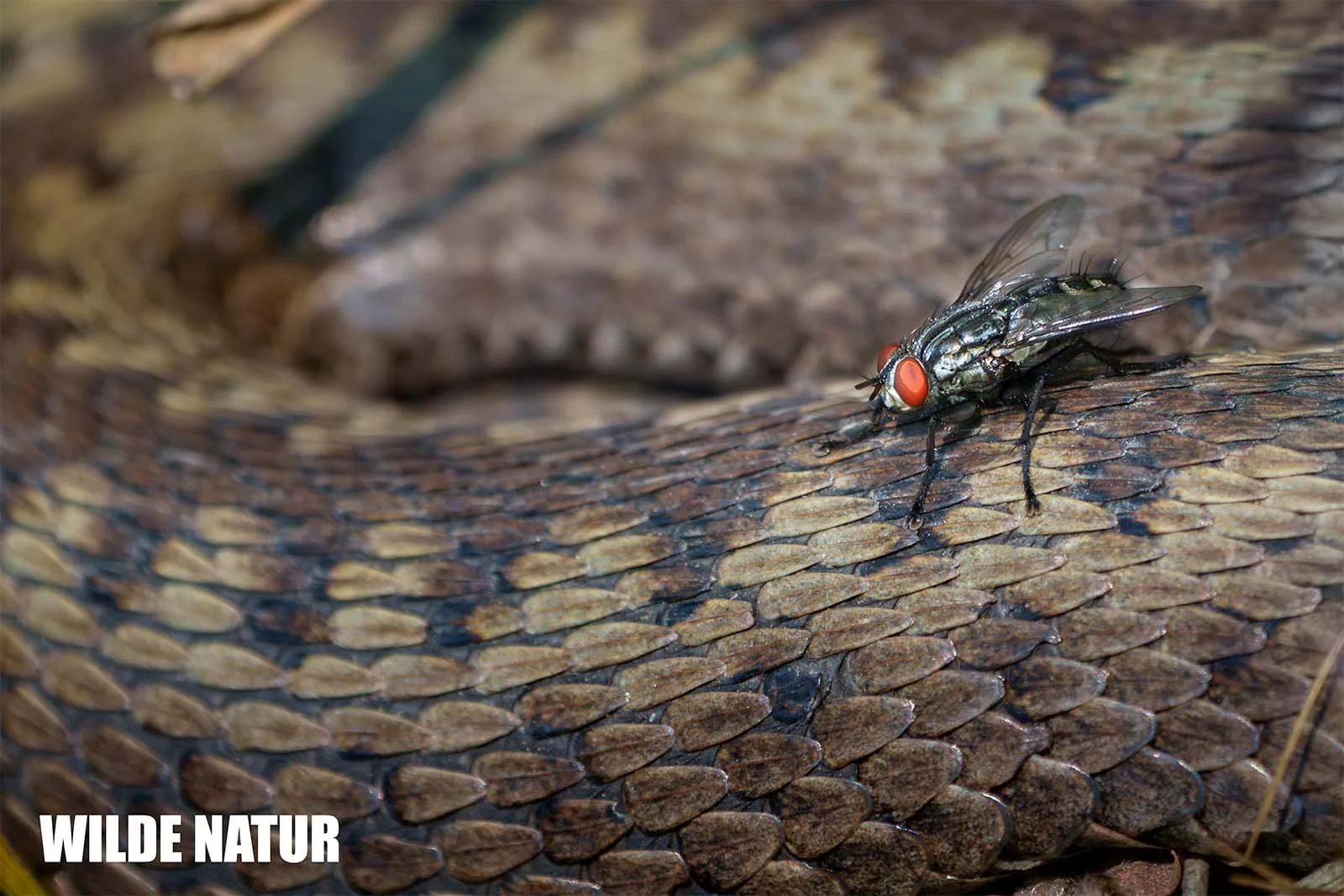
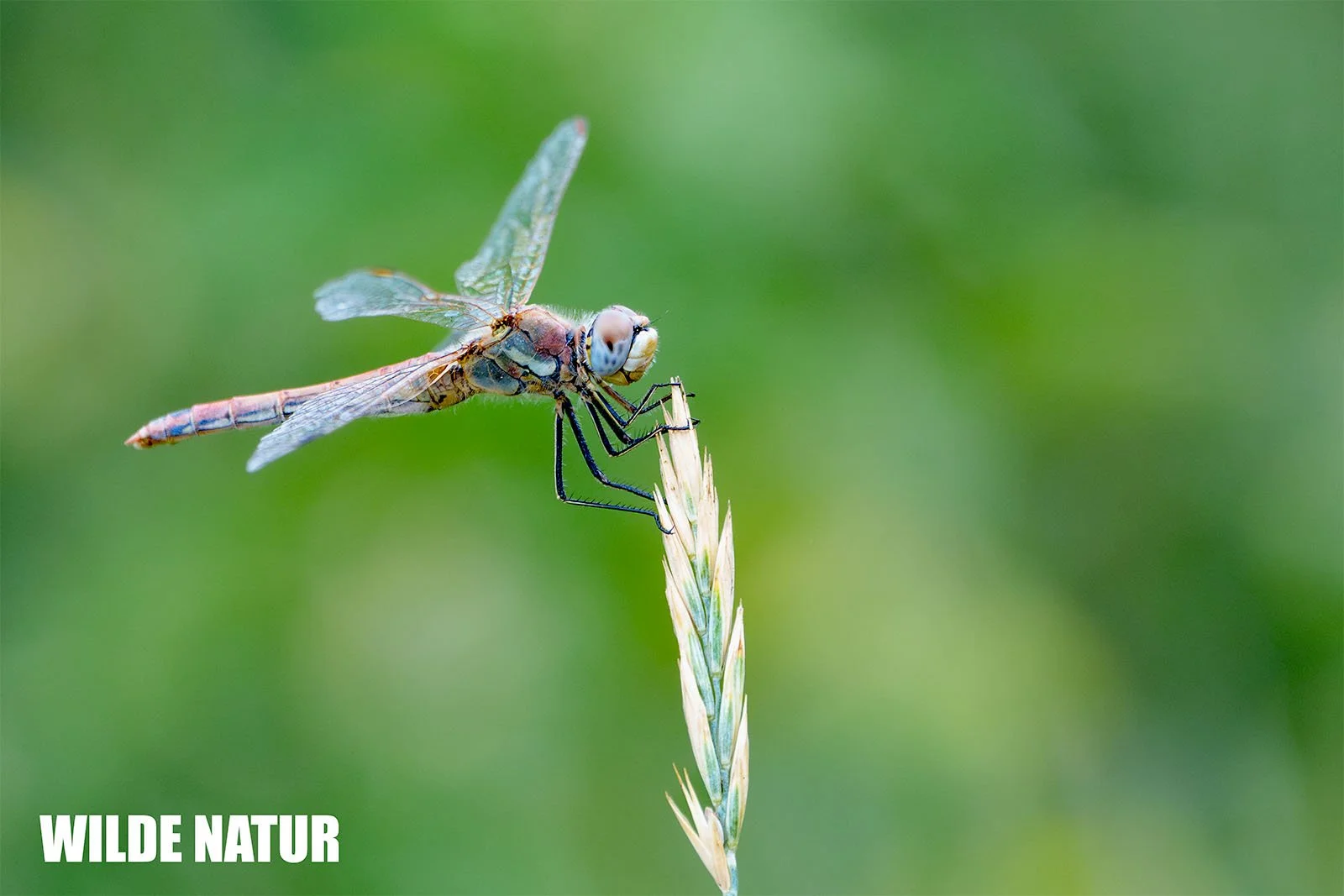
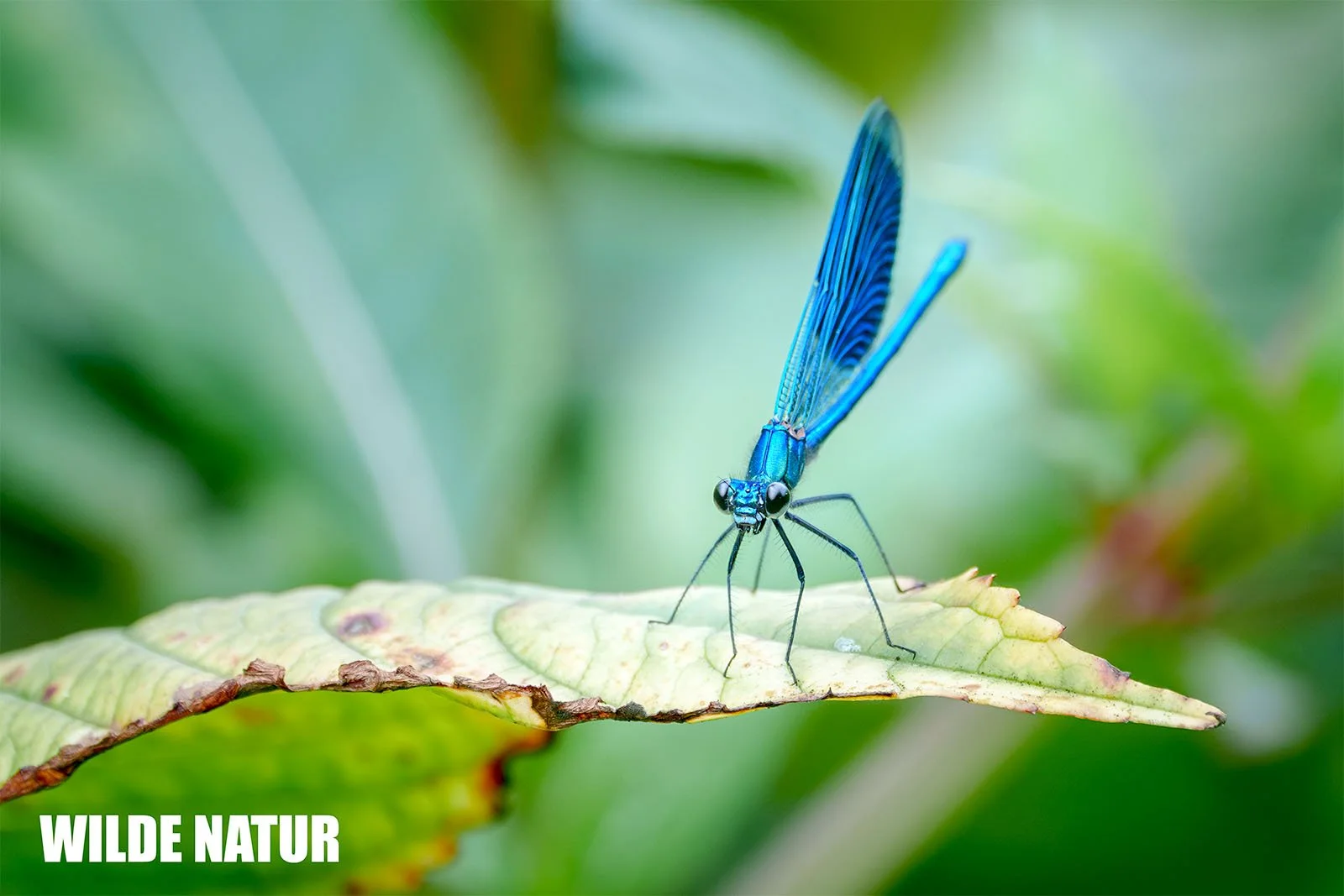
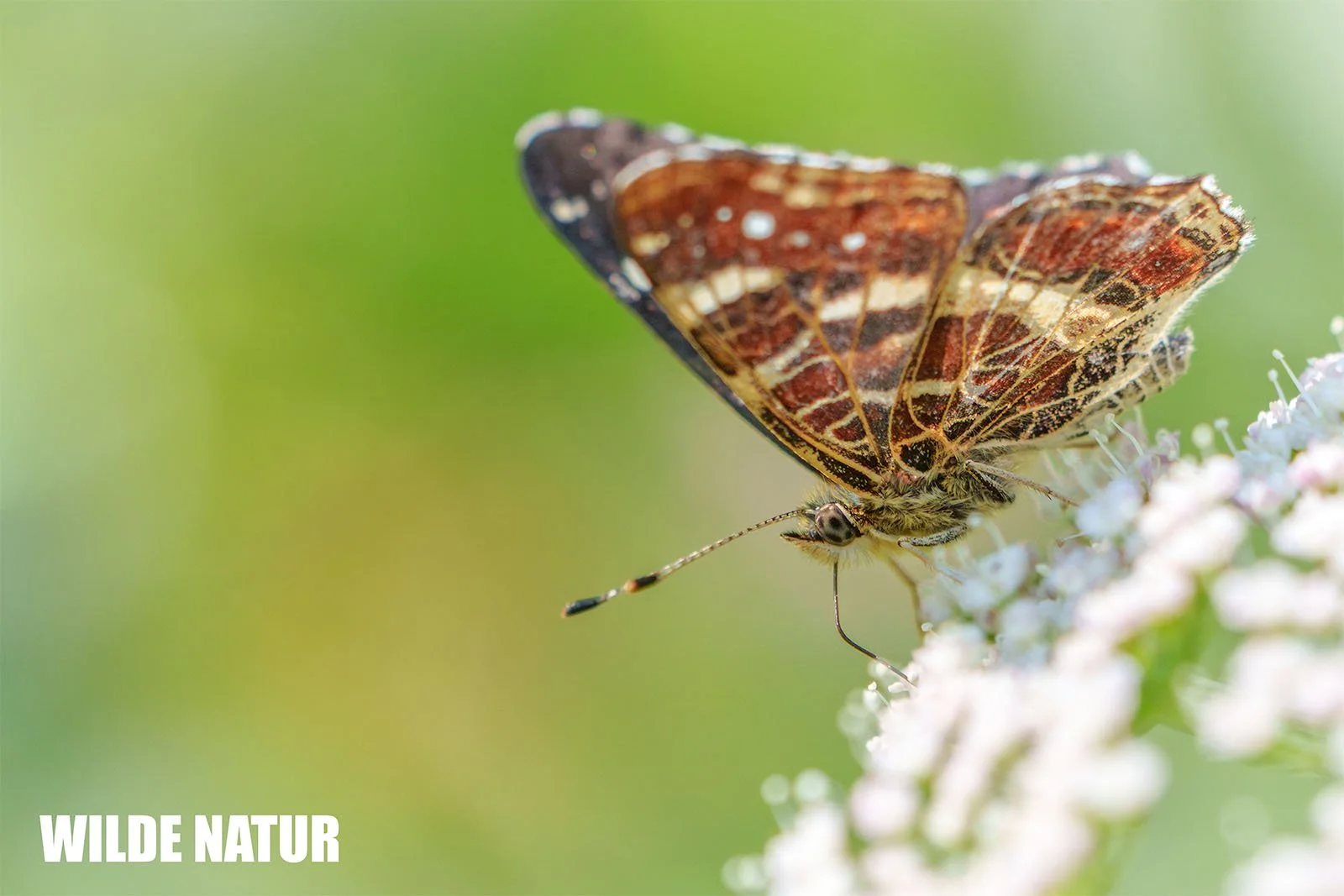
Who says you always need a macro lens to take exciting close-up shots?
Do you know this situation?
Your time outdoors is often limited because everyday life and work take up most of it. So, you combine your photography with a walk or a hike – without a fixed plan. That’s when it’s especially practical to rely on a single lens that keeps you flexible for both wildlife and macro shots.
Even though I’m showing “macro” images taken with the Sony 100–400 mm GM f/4.5–5.6 in this article – because my gear is based on the Sony system – I want to emphasize: these options exist with other brands too, as long as the lens meets certain technical requirements.
What makes the Sony 100–400 mm so interesting as a telephoto zoom?
First, its weight: it’s light yet compact. The image quality, especially sharpness, is excellent, and the autofocus works fast and precisely. At 400 mm and f/5.6, it delivers impressive wildlife images in bird and mammal photography. On top of that, the lens is teleconverter-compatible – with a 1.4× TC it quickly turns into a 560 mm f/8.
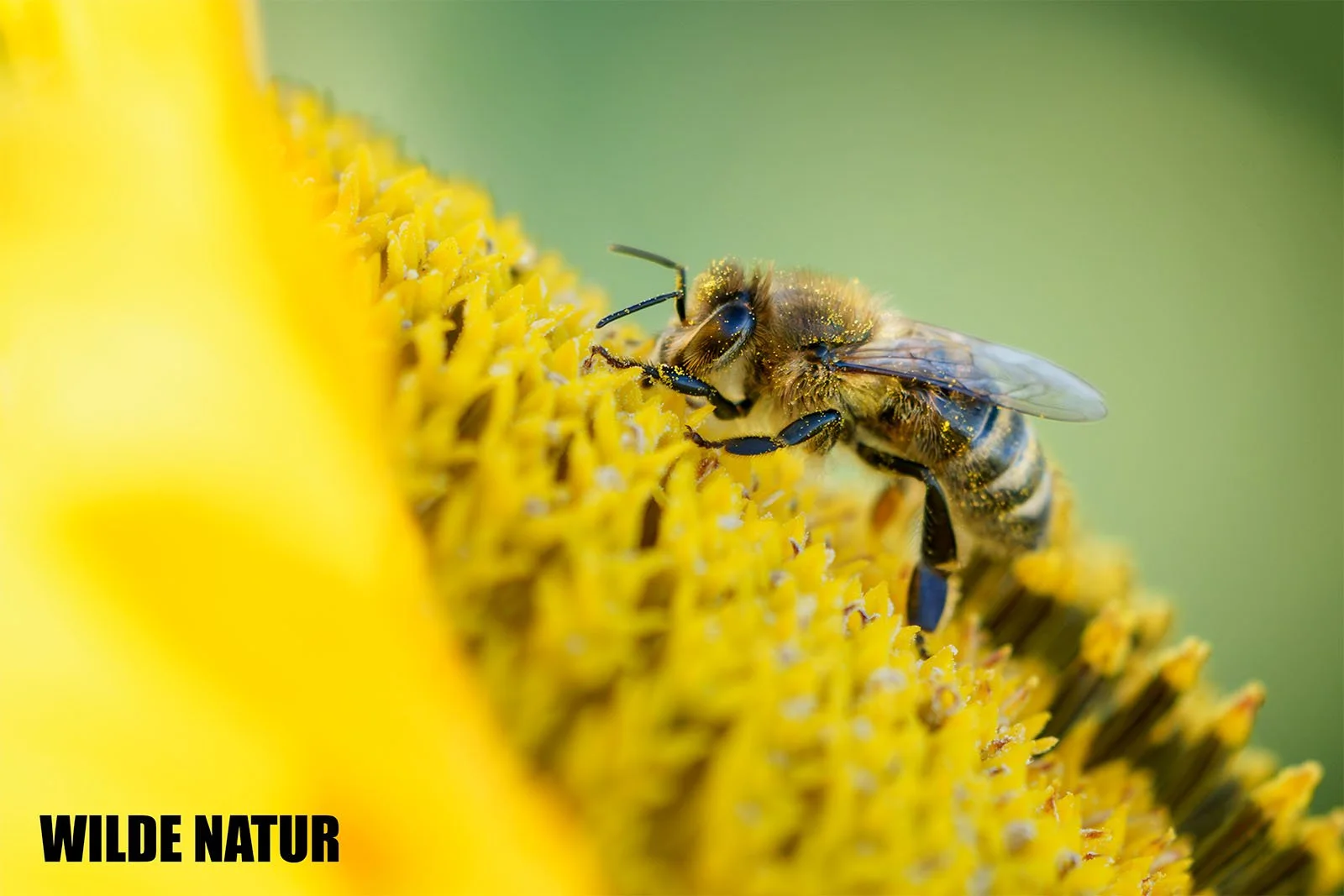
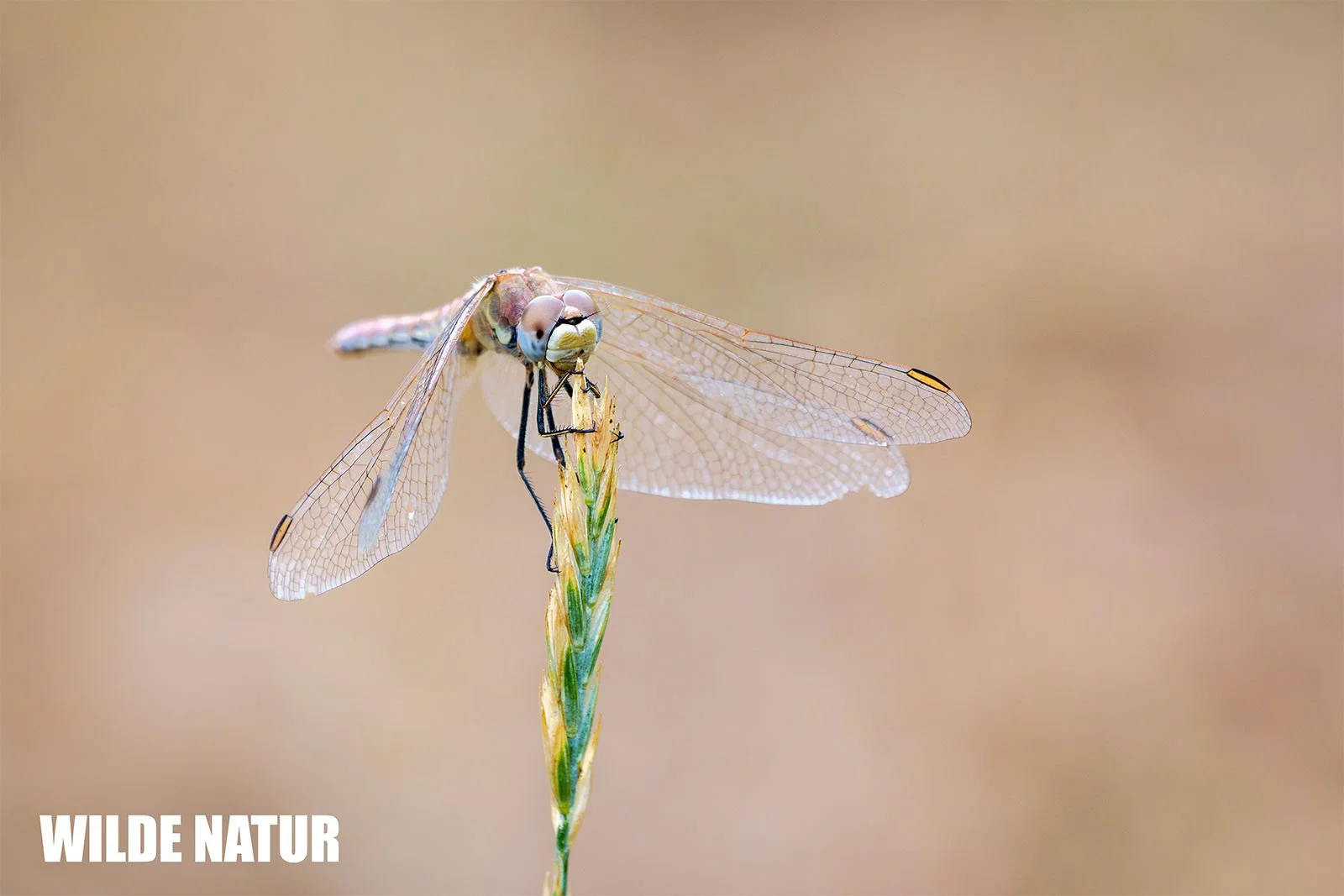
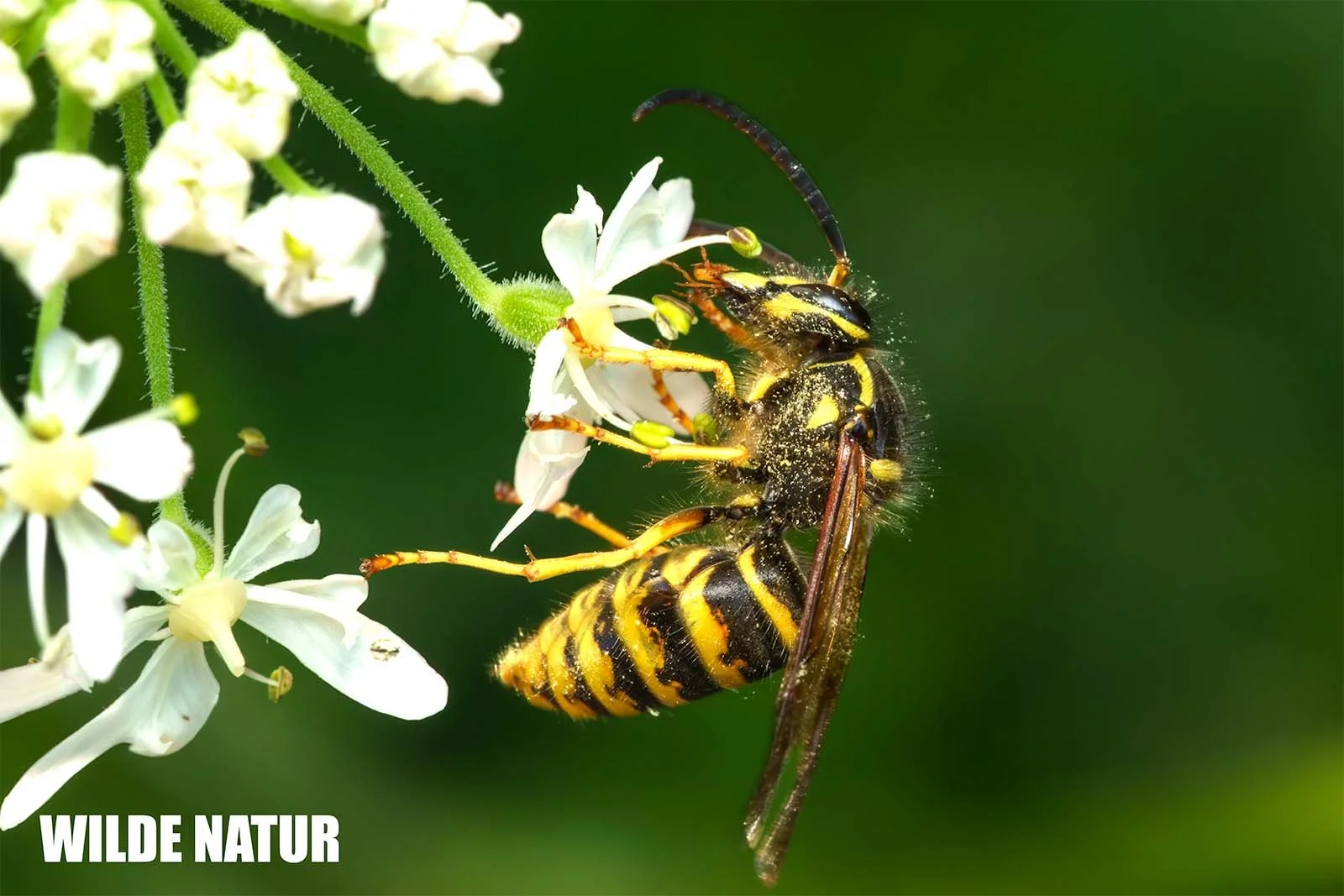
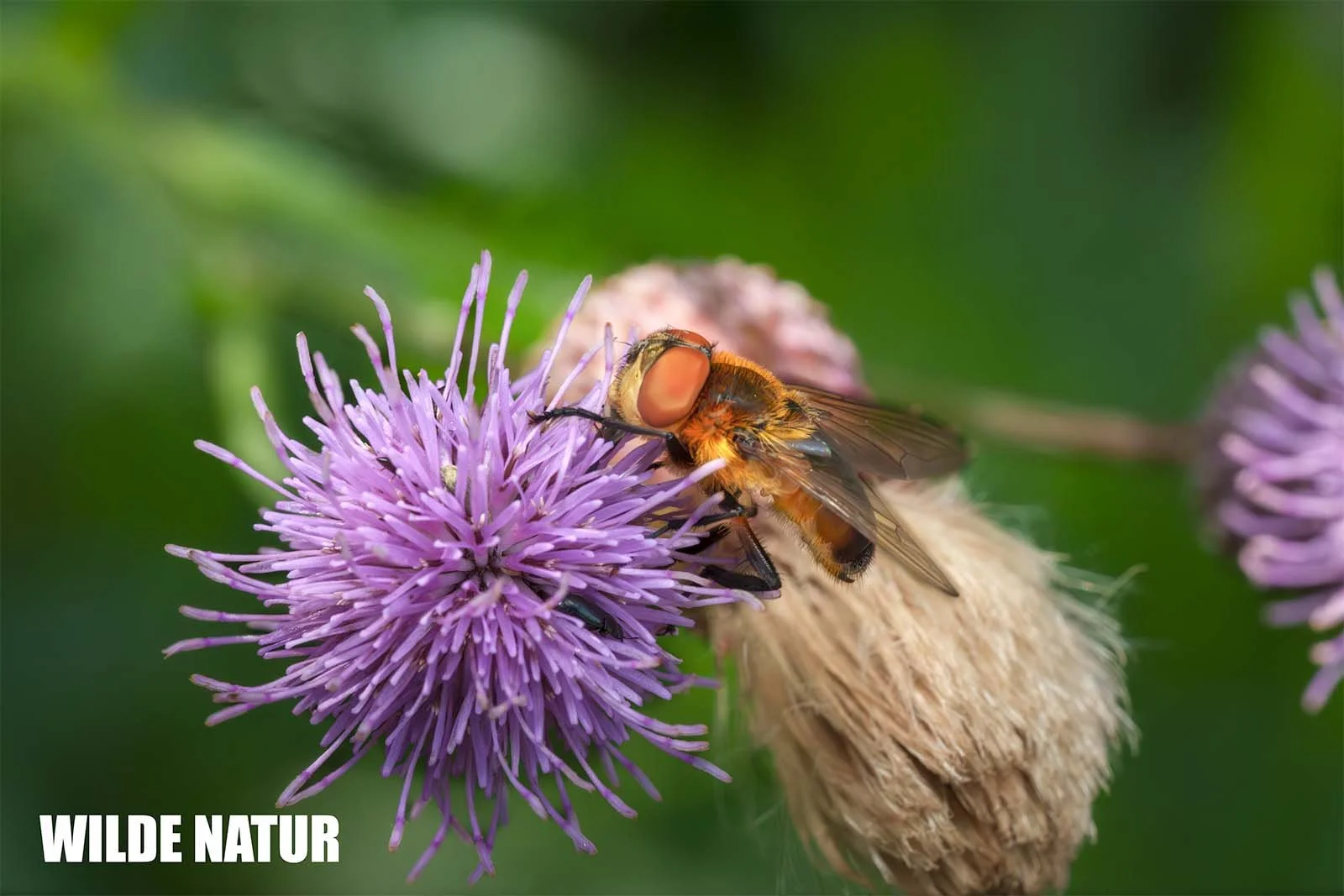
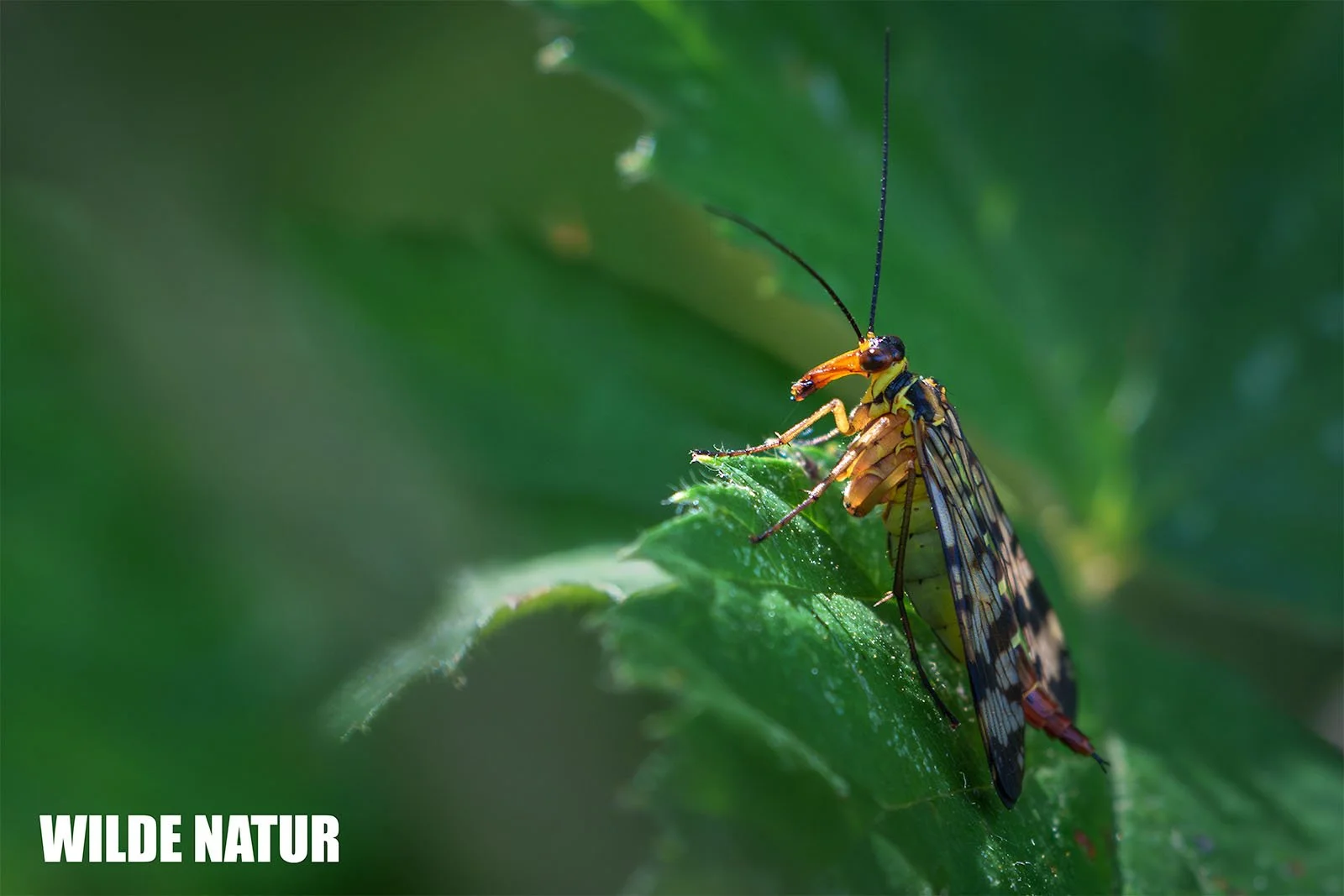
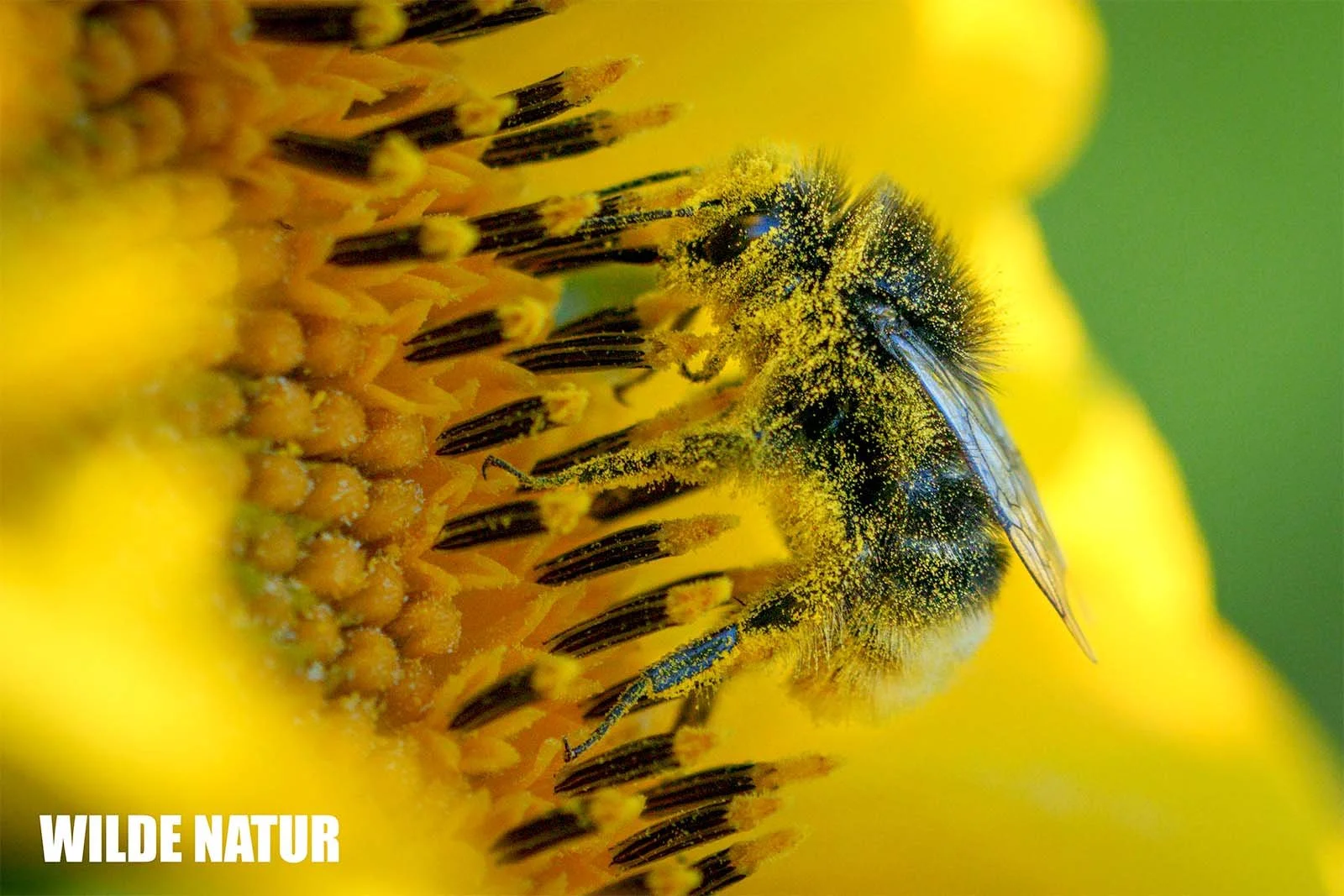
A key feature for the macro range is the minimum focusing distance, which for the Sony 100–400 is only about 90 cm. At 400 mm, this allows you to get surprisingly close to your subject. I like to call this its “pseudo-macro capability.” Combined with a high-resolution camera – meaning a sensor with plenty of megapixels – you can already achieve very convincing macro shots.
Fun fact: Adding a teleconverter does not change a lens’s minimum focusing distance. In our example, with a 1.4× TC at 560 mm, it still remains around 90 cm.
What to look for in other brands for similar performance
If you’re using a different camera system and also want a compact solution like the Sony 100–400 mm for both telephoto and macro photography, make sure it offers these features:
- Minimum focusing distance under 1 m
- High image quality
- Teleconverter compatibility
- Low weight and compact design
- Image stabilizer
Of course, there are tools like extension tubes that can make almost any lens more suitable for macro photography. But in this article, my aim is to show how you can dive into both worlds of nature photography without buying or switching additional equipment. Just pick up your camera and do what we all love most about this hobby: take pictures.


