
Experience Nature, Discover Diversity – Wildlife on Your Doorstep
Germany’s wildlife is full of surprises, with an impressive variety often right outside your door. In this article, you’ll learn which animals live here, how they adapt to the seasons, and why protecting them matters.
- Native animals in Germany can be found in forests, gardens, river landscapes, and even between rows of houses.
- Every species contributes to the natural balance – from wild bees to wildcats.
- Animal behavior follows a natural rhythm – visible from the awakening of spring to the retreat of winter.
- You can help protect their habitats with just a few simple actions.

Grey seal (Halichoerus grypus)
The grey seal is Germany’s largest predator – native to the North and Baltic Seas. Easily recognized by its cone-shaped head and spotted coat, it comes ashore in winter to give birth to its pups and dives skillfully in search of fish.

Slow worm (Anguis fragilis)
The slow worm (Anguis fragilis) is a legless lizard often mistaken for a snake. Unlike snakes, it can blink and will shed its tail (autotomy) when threatened. It prefers damp, sheltered habitats such as under stones or in tall grass and is most active at dusk. Its diet includes slugs, earthworms, and insect larvae. Slow worms are harmless to humans and beneficial for gardens, as they help control pests. They are widespread throughout Germany.
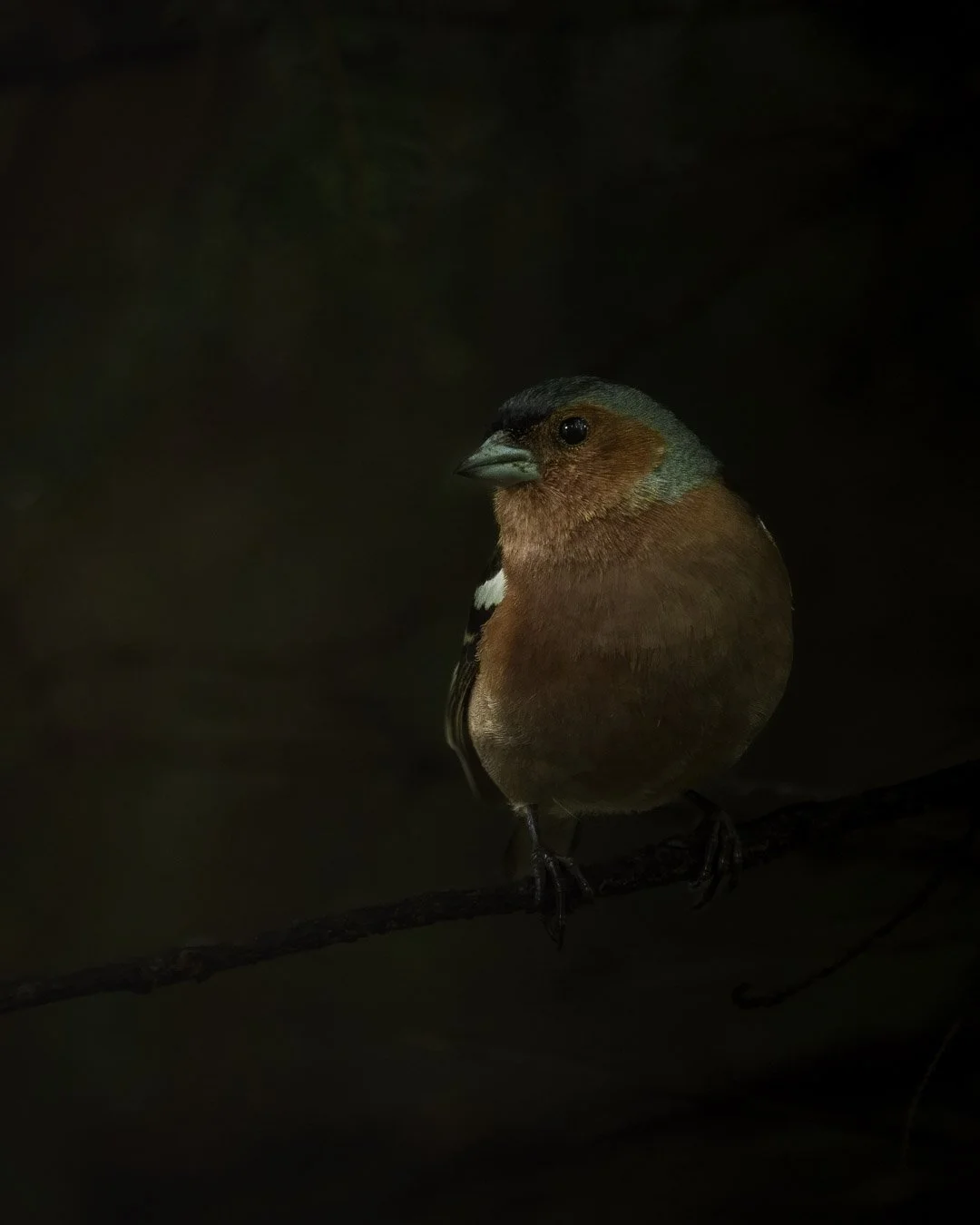
Chaffinch (Fringilla coelebs)
The Chaffinch (Fringilla coelebs) is a songbird about 15 centimeters long, known for its striking, colorful plumage. While it primarily feeds on seeds, it also consumes many insects during the breeding season – a crucial food source for its chicks. Breeding starts in April, and the female usually raises two broods per year. In Germany, the chaffinch is very common and can be seen almost everywhere – in forests, parks, and gardens.
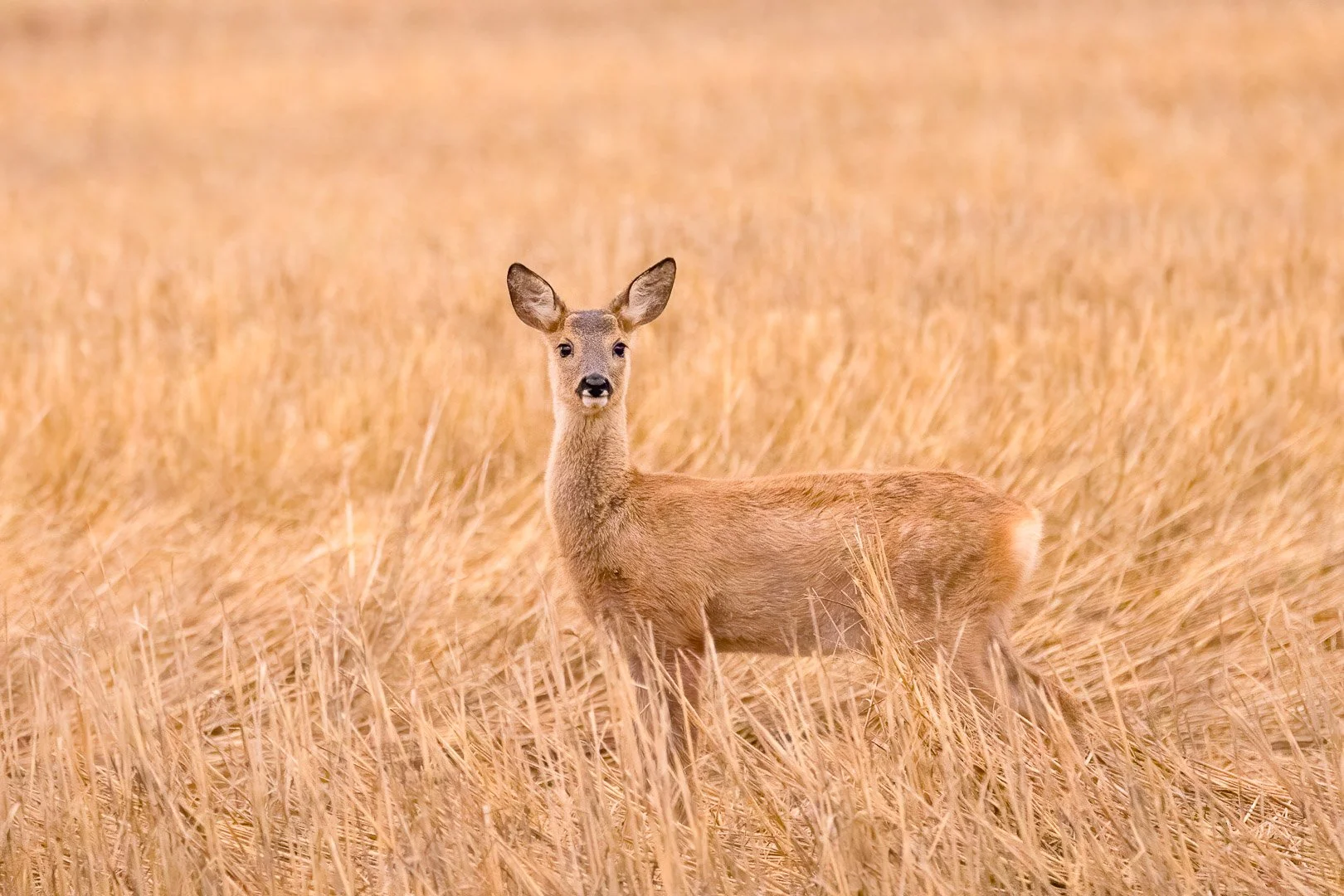
Roe deer (Capreolus capreolus)
The Roe Deer (Capreolus capreolus) is a medium-sized wild animal with long, slender legs, large dark eyes, and notably large ears. Its coat is reddish-brown in summer and turns grayish-brown in winter. Male roe deer grow short, multi-branched antlers, which they shed and regrow each year. In Germany, roe deer are widespread and among the most common native wild animals.

Common crossbill or Red crossbill (Loxia curvirostra)
The Red crossbill (Loxia curvirostra) is a finch-like bird measuring about 15 to 17 centimeters, distinguished by its uniquely crossed bill. This specialized tool allows it to extract seeds from the cones of spruces and other conifers – its primary food source. The red crossbill’s breeding season depends on cone seed availability. It can start unusually early and often occurs in the winter months when food is abundant. In Germany, this bird is mainly found year-round in the coniferous forests of the Central Uplands and Alpine regions.

Red deer (Cervus elaphus)
The Red deer (Cervus elaphus) is one of the largest native wild animals in Europe and is easily recognized by the impressive antlers carried only by the males. It inhabits open woodlands, clearings, and forest edges that offer sufficient cover. During the rutting season in autumn, its loud roaring call can be heard from afar. In Germany, red deer are primarily found in large forest areas such as the Eifel, the Bavarian Forest, and the Lüneburg Heath.
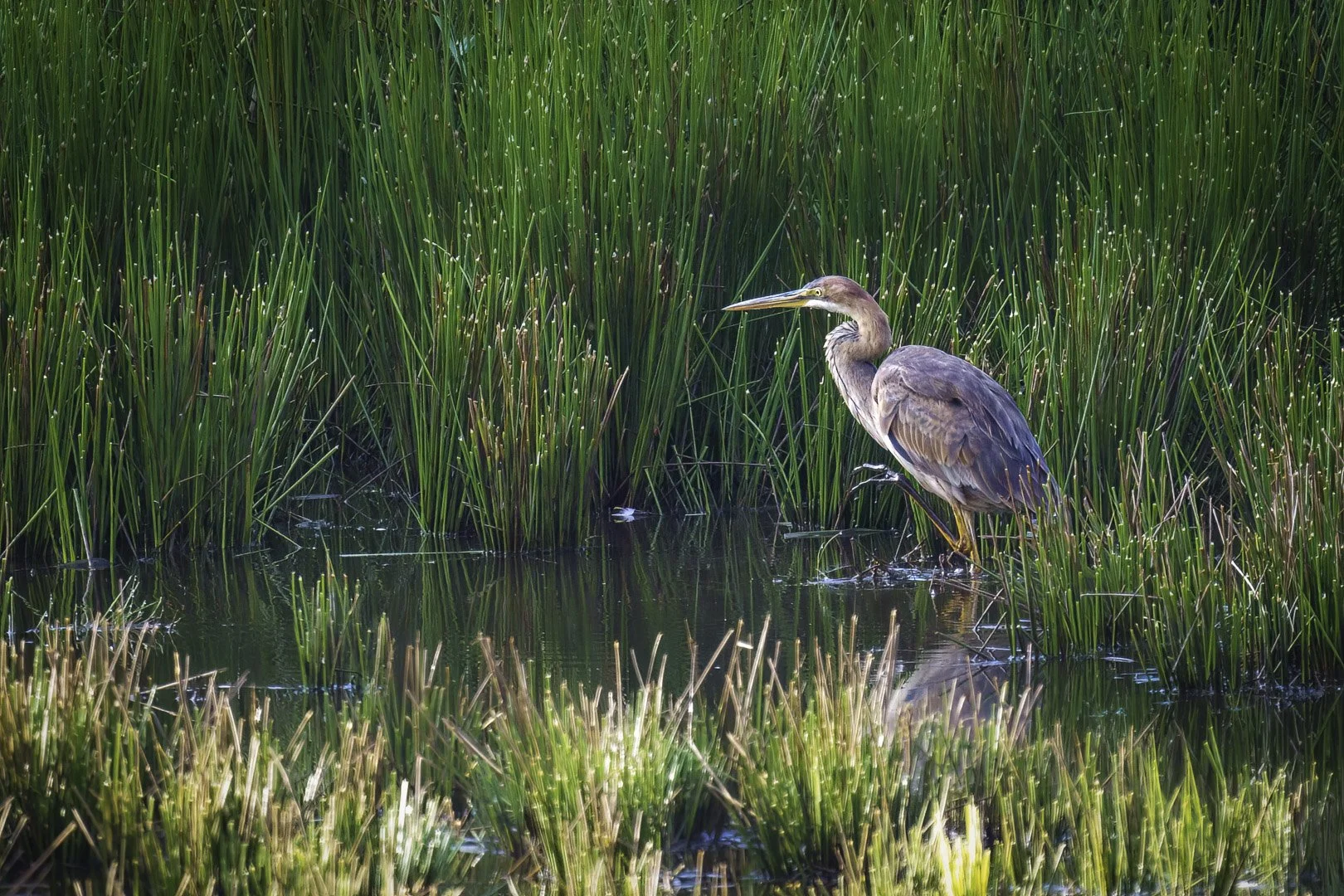
Purple heron (Ardea purpurea)
The Purple heron (Ardea purpurea) is a gracefully built heron, reaching up to 90 centimeters in height, with striking reddish-brown plumage and a long, tapering beak. It skillfully hunts in shallow waters for prey such as fish, amphibians, and insects. The breeding season usually begins in May. Nests are well concealed within dense reed beds, often built in colonies alongside other herons. In Germany, the purple heron is among the rare breeding birds, found mainly in extensive reed landscapes in the south and west of the country.
Native Animals in Germany
Experience Nature, Discover Diversity – Wildlife on Your Doorstep
Germany’s wildlife is full of surprises, with an impressive variety often right outside your door. In this article, you’ll learn which animals live here, how they adapt to the seasons, and why protecting them matters.
- Native animals in Germany can be found in forests, gardens, river landscapes, and even between rows of houses.
- Every species contributes to the natural balance – from wild bees to wildcats.
- Animal behavior follows a natural rhythm – visible from the awakening of spring to the retreat of winter.
- You can help protect their habitats with just a few simple actions.
Table of Contents
- Introduction
- Habitats: Diversity in Small Spaces
- Forests
- Meadows & Fields
- Wetlands
- Cities & Gardens
- Animal Groups in Focus
- Seasons and Animal Behavior
- Observation Tips: Discovering Wildlife
- FAQ – Native Animals in Germany
Introduction
Whether it’s a crane soaring through the autumn sky or a hedgehog rustling in the leaves, native animals in Germany often cross your path in nature. Many species live unnoticed nearby – they’re not only beautiful but also ecologically important.
Habitats: Diversity in Small Spaces
Despite its relatively small size, Germany offers a remarkable variety of habitats – from the Wadden Sea to raised bogs and low mountain ranges. This diverse landscape is a vital treasure for wildlife.
Forests: From Eifel Beech Woods to Lynx Territory
In the Thuringian and Bavarian Forests, lynxes are once again roaming – thanks to targeted reintroduction efforts. These woodlands are also home to wild boars, tawny owls, lesser spotted woodpeckers, and wood mice.
Meadows & Fields: Between Hoppers and Hiders
In traditionally managed meadows, weasels hunt while partridges seek cover. The colorful goldfinch – Bird of the Year 2016 – likes to nest along field edges dotted with thistles.
Wetlands: Vibrant Lifelines
Restored riverbanks are once again teeming with dragonflies, kingfishers, and beavers. Spring is an especially rewarding time to spot migrating amphibians like tree frogs and newts heading to their breeding waters.
Cities & Gardens: Hidden Wilderness
In Hamburg’s old courtyards, kestrels nest, while hedgehogs roam backyards. Urban pigeons are long-feral descendants of once-domesticated birds – a reminder of how humans have used and then forgotten animals. Species like swifts and bats still share our spaces in surprisingly wild ways.
Animal Groups in Focus
Mammals: Elusive and Persistent
Alongside badgers, deer, and wild boars, otters and wildcats are considered comeback species. Conservation organizations are currently running camera trap projects across Germany to monitor their populations.
Birds: Soundscapes on Wings
Unforgettable experiences include crane migrations, the rutting calls of red deer, and the return of songbirds from their wintering grounds. But it’s worth tuning in all year long – blackbirds, robins, tits, and chiffchaffs are often heard even when they remain out of sight.
Amphibians & Reptiles: Silent Indicators of Clean Environments
The fire salamander is a symbol of clear, cool forest springs, while the wall lizard thrives even along old railway embankments.
Insects: Small but Powerful
Native flowering plants depend on pollination – and many wild bee species are now critically endangered. Initiatives like “Blooming Bavaria” offer vital support, but long-term solutions are still needed.
Seasons and Animal Behavior
Spring: A Fresh Start
At crane resting spots like those on the Baltic Sea, you can witness their return from Africa. Tree frogs call from ponds – a chorus that shatters the silence. After the winter lull, wildlife activity surges. The next generation is ready to emerge.
Summer: Peak of the Life Cycle
Young kestrels learn to fly, and stag beetles might cross your path in the forest. It’s an ideal time for nature photography – especially near bodies of water.
Autumn: Strategy and Stockpiling
Amphibians retreat, and hedgehogs fatten up for winter. Starlings gather in massive flocks – so-called “murmurations” in places like Mecklenburg-Western Pomerania are awe-inspiring natural spectacles.
Winter: Who Stays, Who Leaves?
Animals like the eagle owl continue to hunt, while the edible dormouse sleeps deeply. Tracks in the snow – from foxes, martens, or deer – reveal that the wild remains active.
Observation Tips: Discovering Wildlife
- Best in the morning mist: Clearings in the forest are especially lively then.
- Stay quiet: Animals have a keen sense of smell and hearing.
- Use optics: Binoculars or a zoom camera can be invaluable.
- Lookout spots: Observation towers or specially built wildlife hides can improve your chances.
FAQ – Native Animals in Germany
Which animals are considered native?
All those that have lived in Germany for generations without human intervention – such as red deer, white-tailed eagles, sparrowhawks, or wild boars.
Which ones are particularly endangered?
The list is long: it starts with the wildcat and, sadly, doesn’t end with the whinchat. The main threats are habitat loss and the use of harmful substances.
Can I do anything helpful in my garden?
Diversity over tidiness: wild corners, water sources, and no pesticides – these directly support biodiversity.
Where can I best observe native wildlife?
There are many great places – right outside your door in forests or open landscapes, as well as in biosphere reserves, nature and bird sanctuaries, or along restored riverbanks. Guided excursions also offer valuable insights.
Are urban foxes dangerous?
No. They avoid humans and feed on mice, rats, and food scraps. Peaceful coexistence is entirely possible.
Germany’s native animals are far more than a scenic backdrop – they’re essential to a functioning ecosystem. Protecting them starts with awareness and mindfulness. If you look closely, you’ll see: nature is everywhere – and it needs you.


