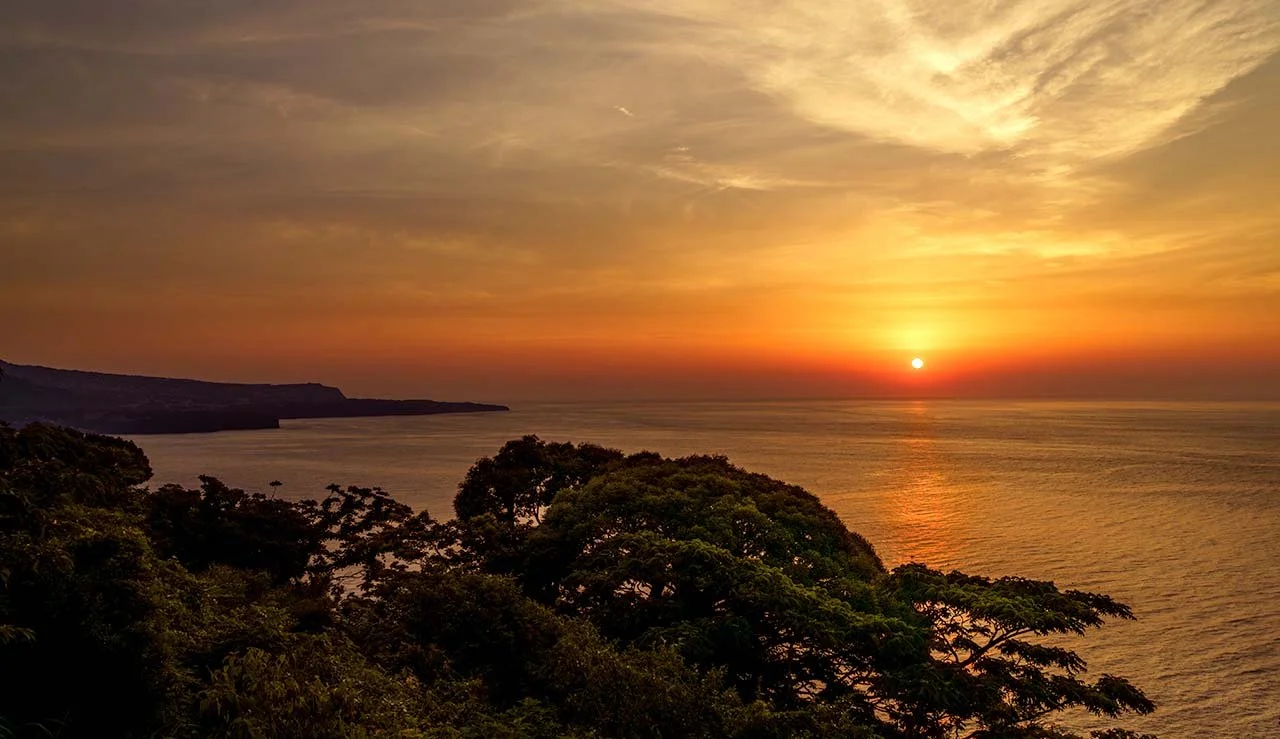
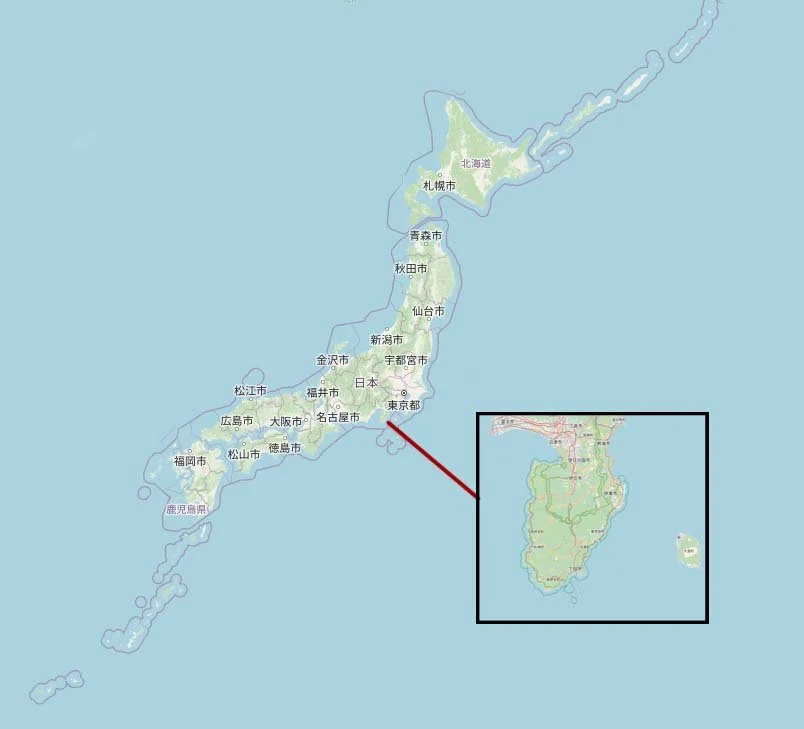
About 20 million years ago, the Izu Peninsula, at that time a collection of underwater volcanoes, lay on the floor of the Pacific Ocean. In addition to volcanic activities, tectonic shifts over the centuries played a crucial role in shaping the present-day Izu Peninsula. Just a two-hour drive from Tokyo, the Izu Peninsula, which was designated a UNESCO Global Geopark in 2018, is now a popular recreational area for Tokyo residents and is admired for its diverse natural beauty. There is much to discover both underwater and on land. Alongside a wealth of outdoor activities, many natural formations can be admired. Moreover, Izu offers many onsen, the famous hot springs of Japan.
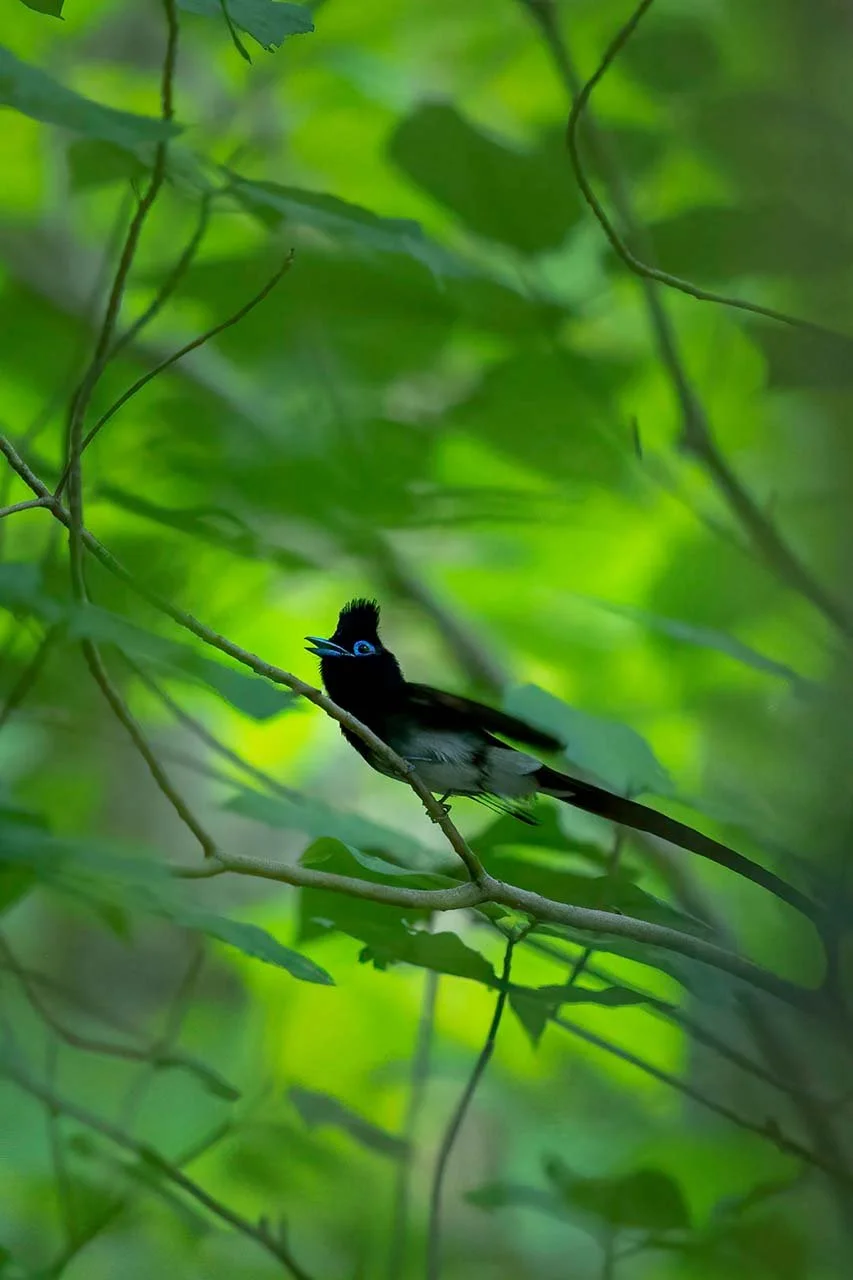
The peninsula is home to an impressive variety of flora and fauna, ranging from mixed forests with Japanese cedars or bamboo to exotic birds like the Japanese Paradise Flycatcher. Nature lovers of all kinds will find something to enjoy here.
For photographers, especially those specializing in landscape or wildlife photography, the Izu Peninsula offers a rich array of subjects. There are numerous interesting landscape formations, such as dreamlike beaches with rock formations jutting out of the Pacific, and animal species that can only be found in this region.
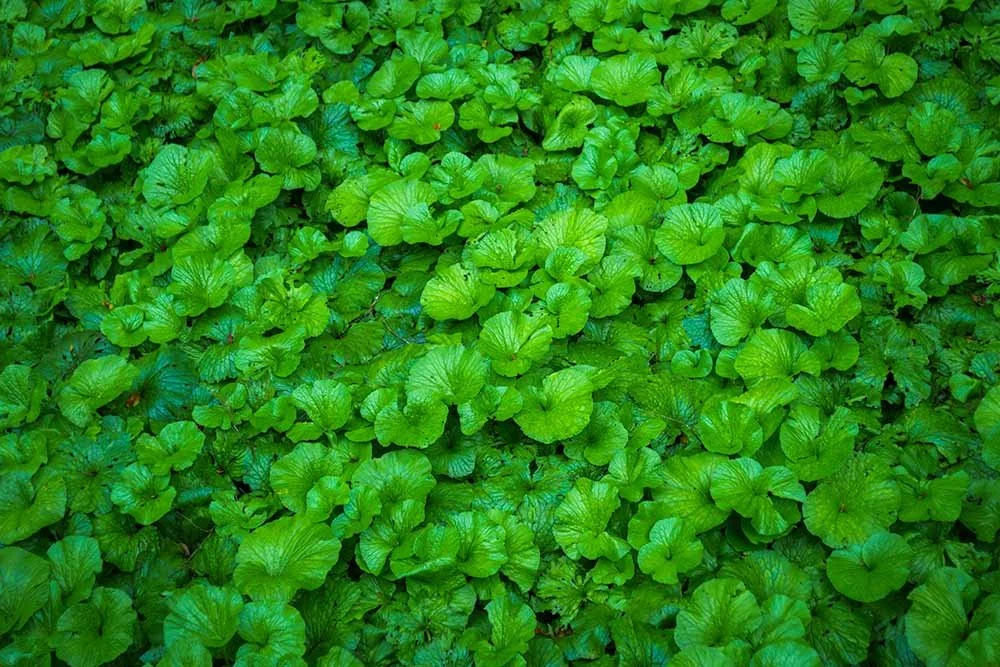
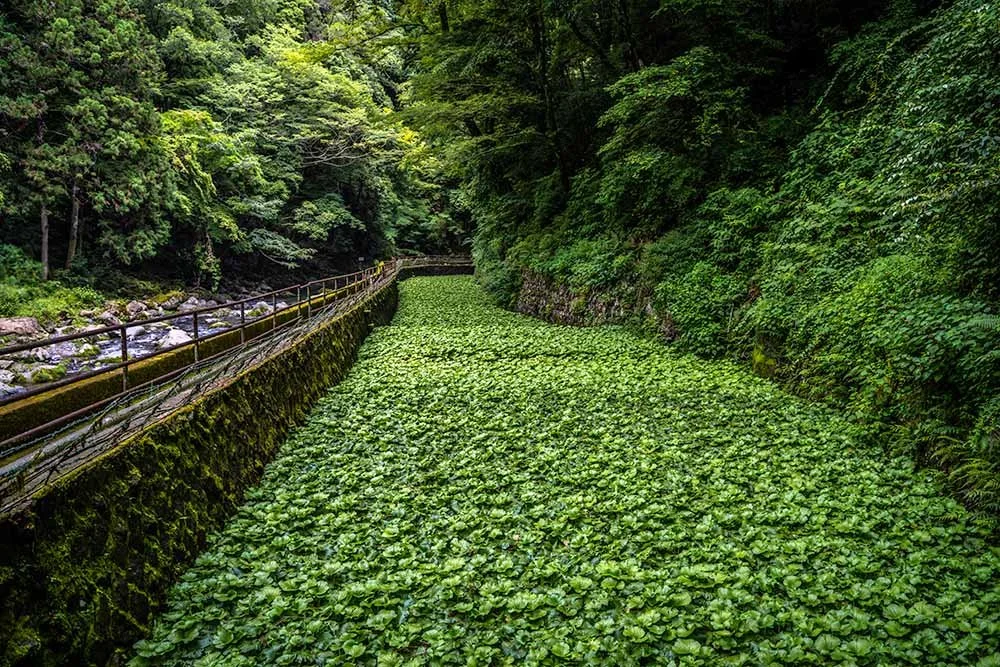
This wild nature also provides the best conditions for cultivating the famous wasabi, making the Izu Peninsula one of the most important wasabi-growing areas.
Izu’s Flora and Fauna
The forests on the peninsula are a true paradise for nature lovers. Amidst these forests, one can experience the beauty of beeches, the gentle dance of bamboo, the vibrant colors of Japanese maples, and the majestic presence of Japanese cedars. The forests on the Izu Peninsula are mixed forests, including beeches, bamboo, Japanese cedar, and Japanese maple. The impressive Japanese cedars, some of which are up to a thousand years old, can also be admired there.

Picturesque bamboo forests also offer a unique backdrop for photographers, who will be fascinated by the harmonious arrangement of the bamboo stalks. This region is the ideal place to capture breathtaking photographs of the diversity and magic of the forests.

The Wildlife of Izu
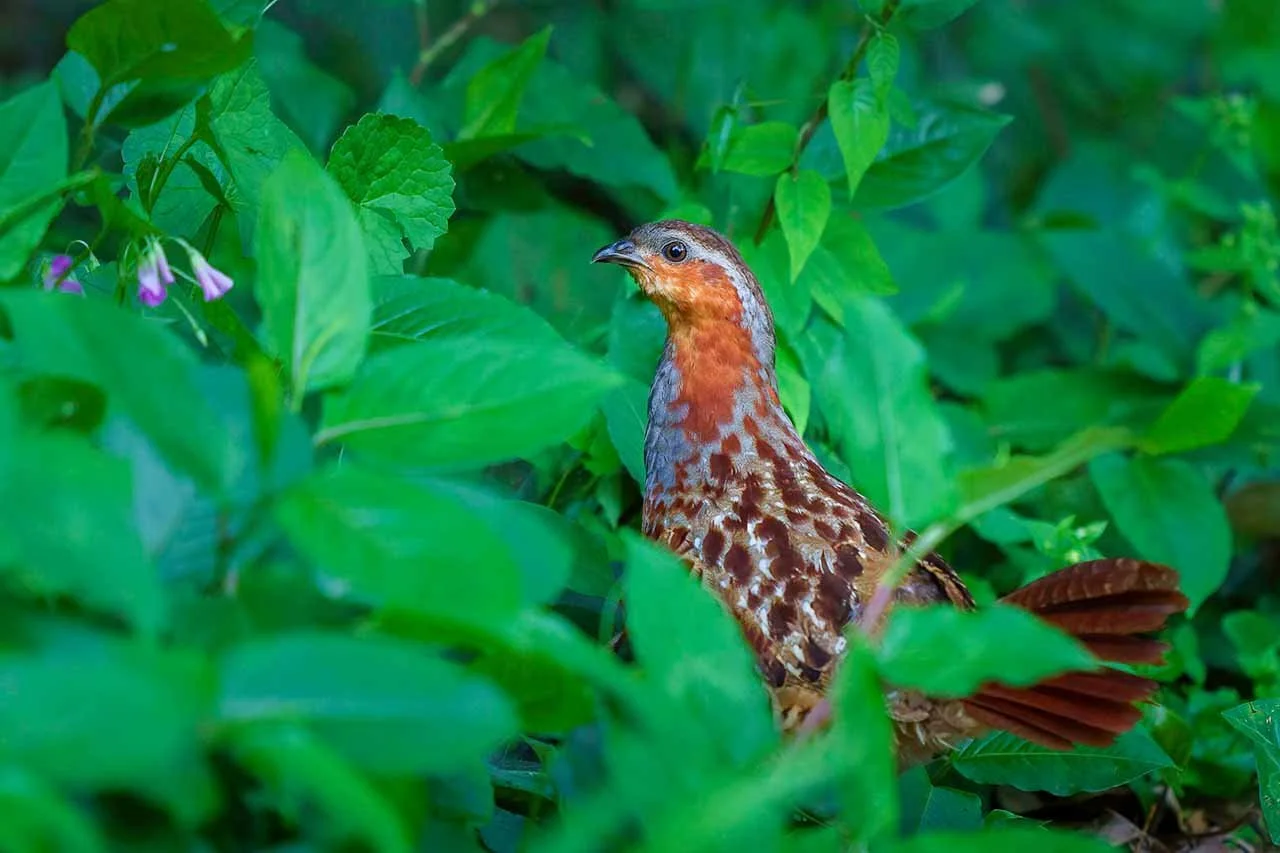
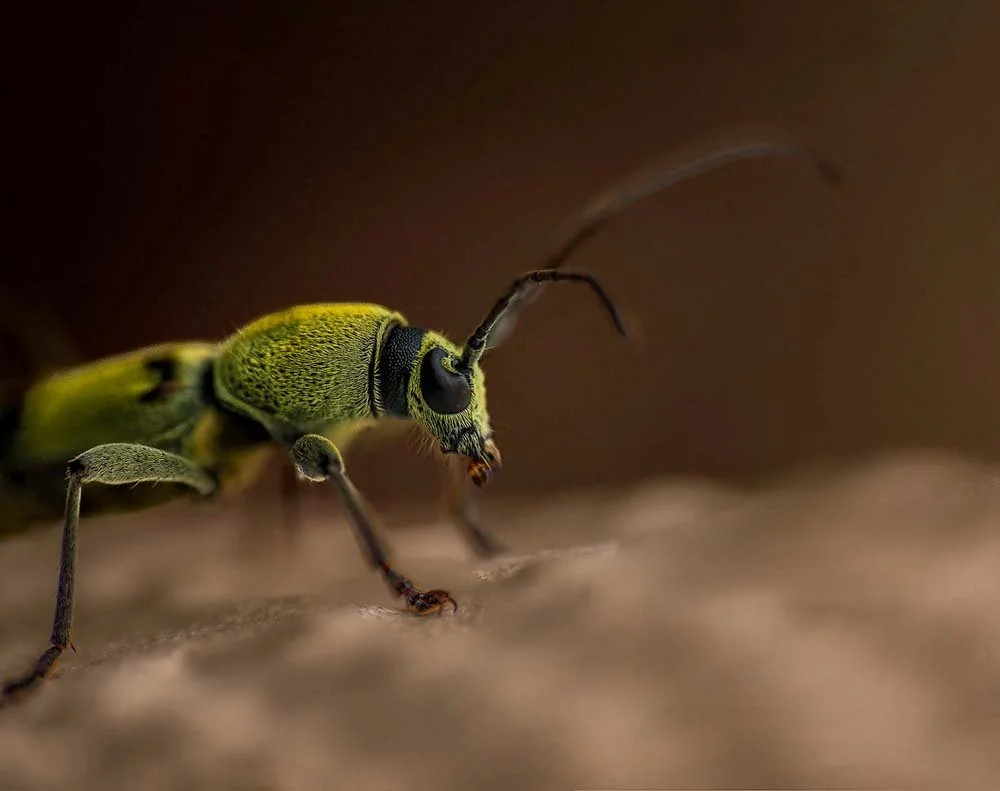
Izu hosts a variety of unique animal species that cannot be found in Germany and Europe. Among them are fascinating bird species such as the Japanese Paradise Flycatcher (Terpsiphone atrocaudata), the Chinese Bamboo Partridge (Bambusicola thoracicus), the White-bellied Green Pigeon (Treron sieboldii), and the Chinese hwamei / melodious laughingthrush (Garrulax canorus). These species are just a few examples of the diverse wildlife in Izu, which will delight any wildlife photographer.


The Underwater World of the Izu Peninsula
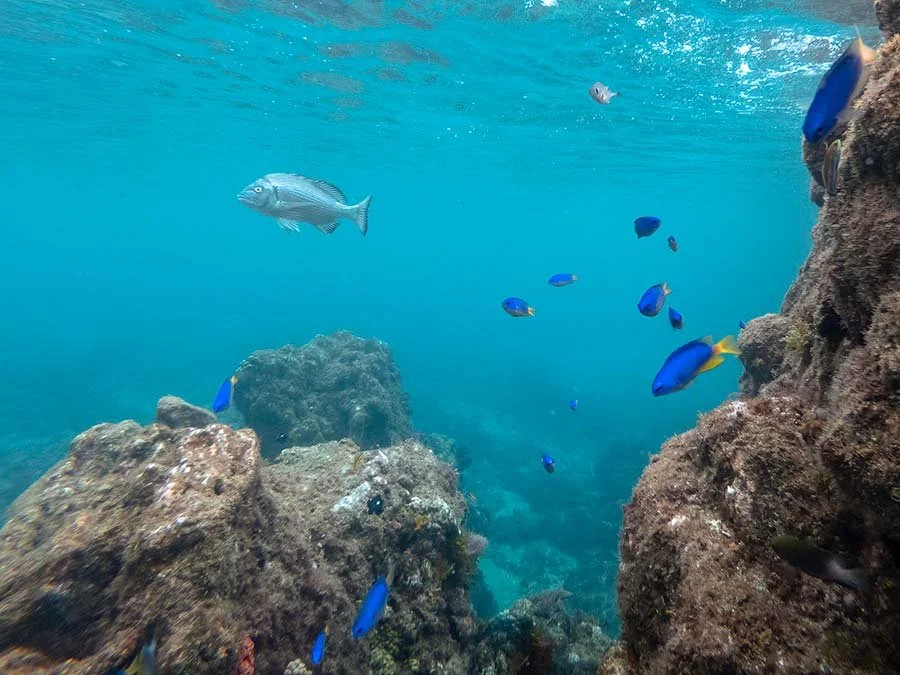
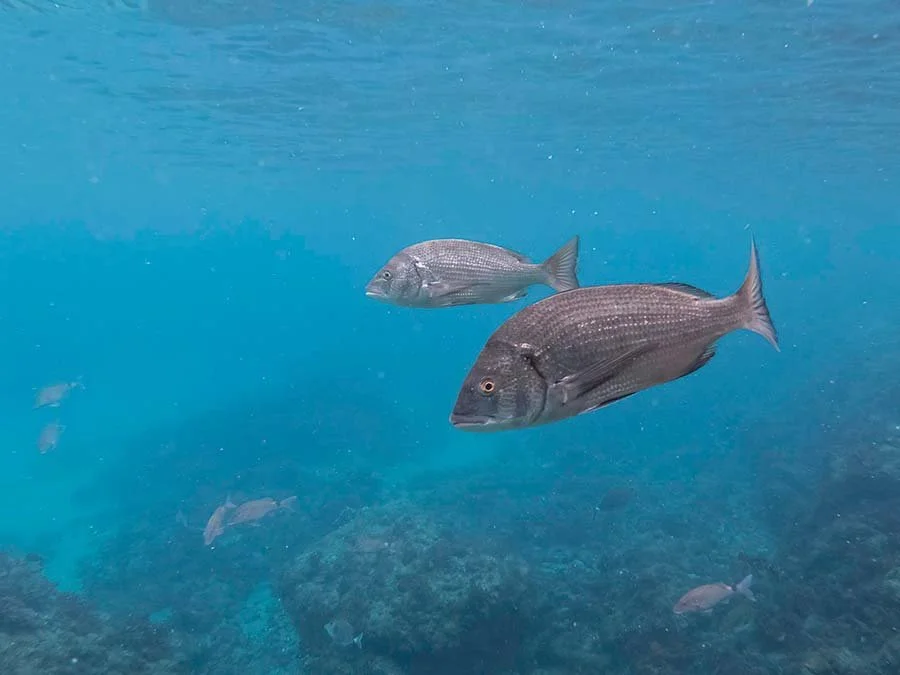
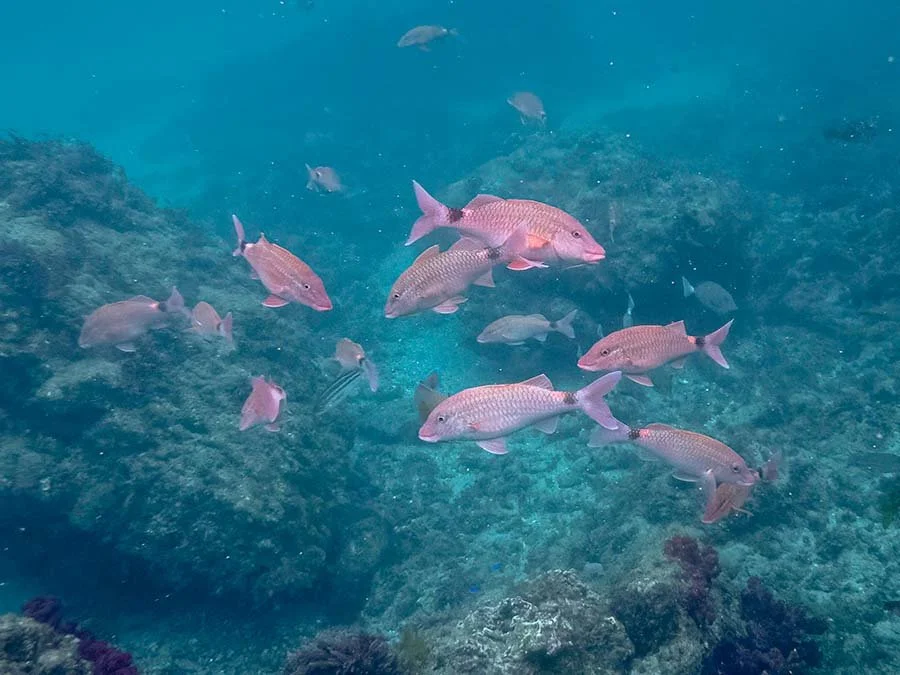
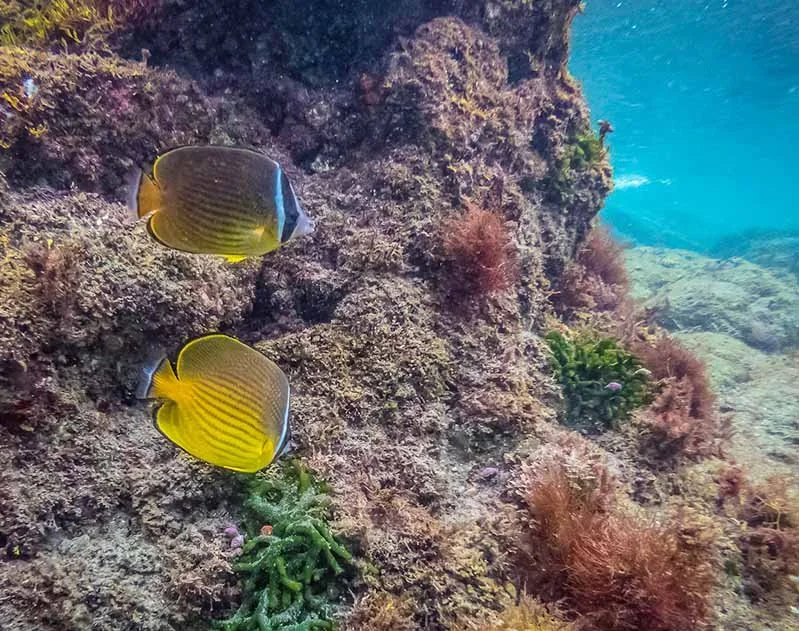
Izu is a great natural environment for wildlife photographers seeking wild nature both above and below the water. When diving or snorkeling along the coast, you can be enchanted by colorful schools of fish. Divers have the opportunity to experience the impressive presence of the hammerhead shark, the cat shark, and the majestic ocean sunfish or common mola (Mola mola) up close. But there are many more species to discover here.
Izu UNESCO Global Geopark Since 2018
The Izu Peninsula is a landscape of exceptional geological significance and scenic beauty. In 2018, UNESCO designated it as a Global Geopark to recognize and protect its remarkable landscape, characterized by numerous active volcanoes. However, the charm of Izu is not solely defined by this. It is actually one of the few places on Earth where two active volcanic mountain ranges intersect – a fascinating geological phenomenon.
In the efforts of the United Nations Educational, Scientific and Cultural Organization (UNESCO) to protect and promote significant geological sites worldwide, the classification of the Izu Peninsula as a Global Geopark highlights its unique geological value. It serves as a living textbook of Earth’s history, inviting the study and understanding of the dynamic forces that have shaped and continue to shape our world.
In addition to its geological uniqueness, part of the Izu Peninsula is also included in the Fuji-Hakone-Izu National Park, which boasts various landscapes, from picturesque lakes and marshes to breathtaking high plateaus beneath Mount Fuji.
Famous Volcanoes
Mount Ōmuro (大室山, Ōmuroyama)
In the picturesque Itō, Shizuoka, Japan, Mount Ōmuro stands majestically over the landscape. This 580-meter-high cinder cone volcano rises impressively from the Izu-Tobu volcanic field and is a unique landmark of Itō. Every spring, it transforms into a vibrant artwork. The plants that sprout after the traditional mountain burning each year cloak the volcano in bright green. Mount Ōmuro is an essential sight in the Fuji-Hakone-Izu National Park. Not only the people of Itō, but all of Japan honor the volcano for its natural beauty.
Mount Amagi (天城山, Amagi-san)
The Amagi Mountains, an imposing volcanic mountain range, dominate the landscape of central Izu Peninsula in Shizuoka Prefecture. The highest peak, Bansaburōdake, reaches a height of 1,406 meters, followed by Banjirōdake and Tōgasayama, which rise to 1,300 meters and 1,197 meters respectively. The Amagi mountain range is not only an impressive geological formation but also a paradise for nature lovers with a variety of plant species.
Fuji (富士山, Fuji-san)
Although Mount Fuji does not belong directly to the Izu Peninsula, it towers majestically over it, shaping its landscape with its imposing presence. On clear days, the mountains from the west to the east of the peninsula offer a spectacular view of the majestic Mount Fuji. From there, one can admire the beauty of this iconic volcano in all its glory.

Izu Peninsula’s Impressive Natural Formations
The impressive natural formations of the Izu Peninsula attract visitors from all over the world. Ancient volcanoes and active geothermal areas offer a fascinating display of nature. Along the picturesque and rugged coastline, there are stunning cliffs with hidden coves. Mysterious caves can be found along the coast, providing great subjects for landscape photographers.
Kawazu Nanadaru (河津七滝) Waterfalls
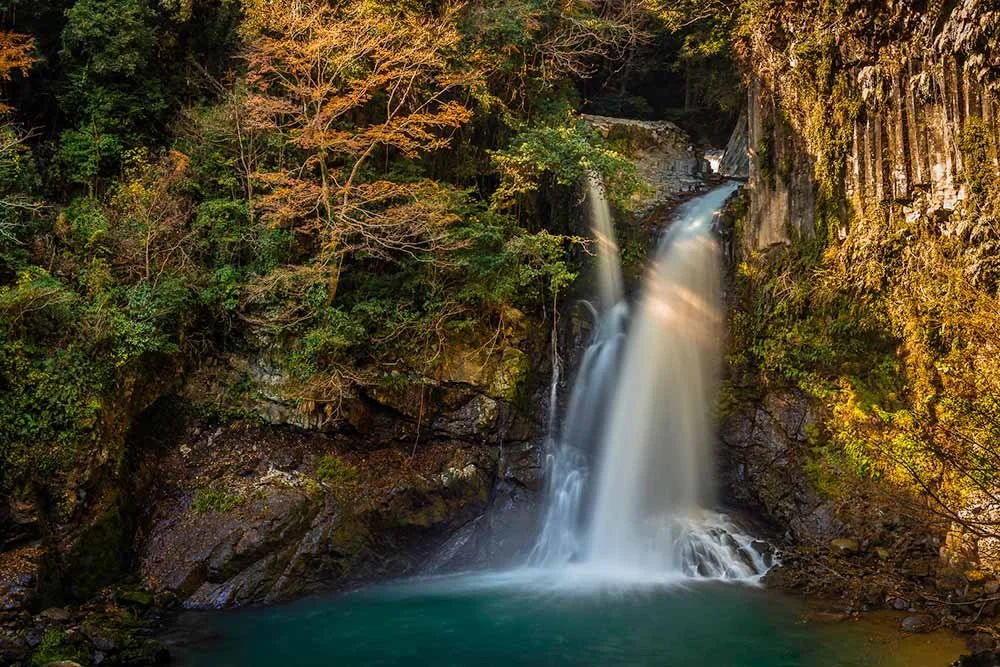
The waters of the Kawazu River cascade through the Amagi mountain range, creating seven falls known as the Kawazu Nanadaru (河津七滝) in the middle of the Izu Peninsula in Shizuoka. These waterfalls range from the 30-meter-high Oodaru to the tiny Kanidaru, which is only 2 meters high. They offer a fascinating natural backdrop, from the 30-meter-high Oodaru to the delicate 2-meter-high Kanidaru.
Jōren Waterfall (浄蓮の滝, Jōren-no-taki)
In the Yugashima district of Izu City, the Jōren Waterfall reveals itself. As a natural monument of Shizuoka Prefecture, it is among the “Top 100 Waterfalls of Japan.” The waterfall creates a veil of mist and enchants with its magical atmosphere. Here, the legend of the Jorōgumo (絡新婦), a spider that transforms into a seductive woman to ensnare her victims, is told. According to the legend, Jorōgumo rules over the Jōren Waterfall. Her home is hidden behind the roaring waters, and with her intricate spider webs, she lures unwary fishermen who come too close to the waterfall. You can read more about the legend of the Jorōgumo here: Wiki about Jorōgumo.

Rugged Coasts and Dreamy Beaches
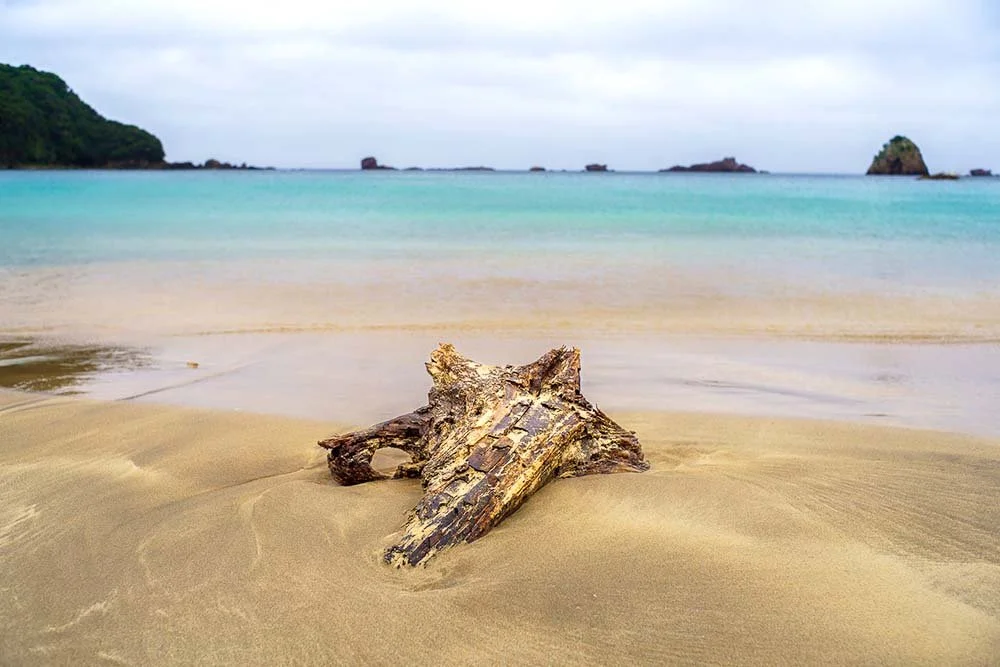
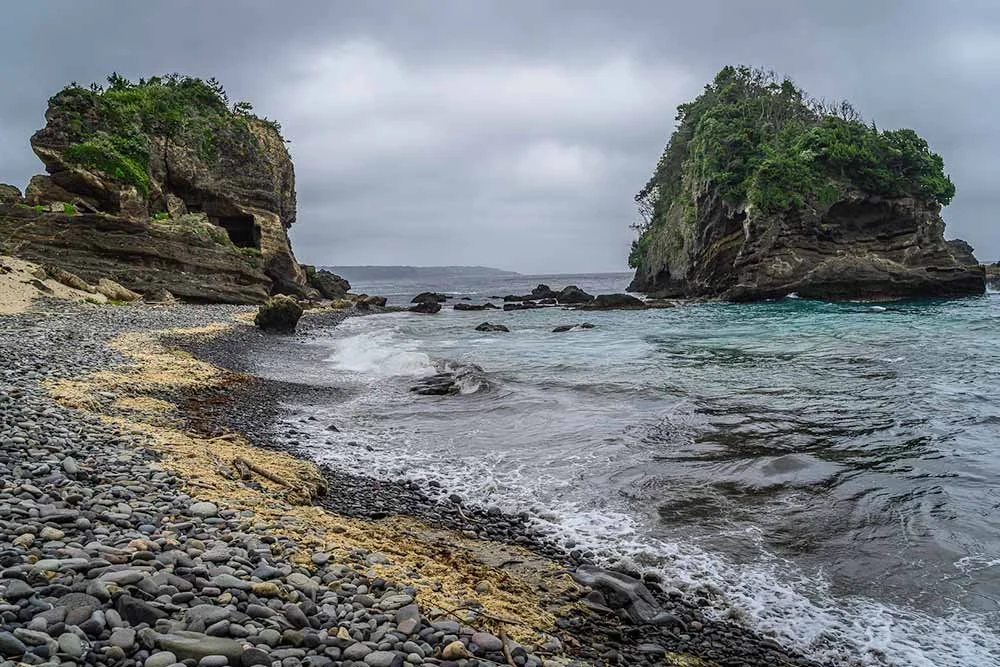
The coast of the Izu Peninsula stretches over 50 km and offers a variety of unique landscapes shaped by volcanic activity. From the steep cliffs on the east coast and the roaring Pacific Ocean to breathtaking sunsets over Suruga Bay with views of Mount Fuji, the coast presents a fascinating backdrop. Every view along this coastline is a visual feast that reflects the power of nature and offers an abundance of subjects for nature photographers.
Caves and Sea Grottos
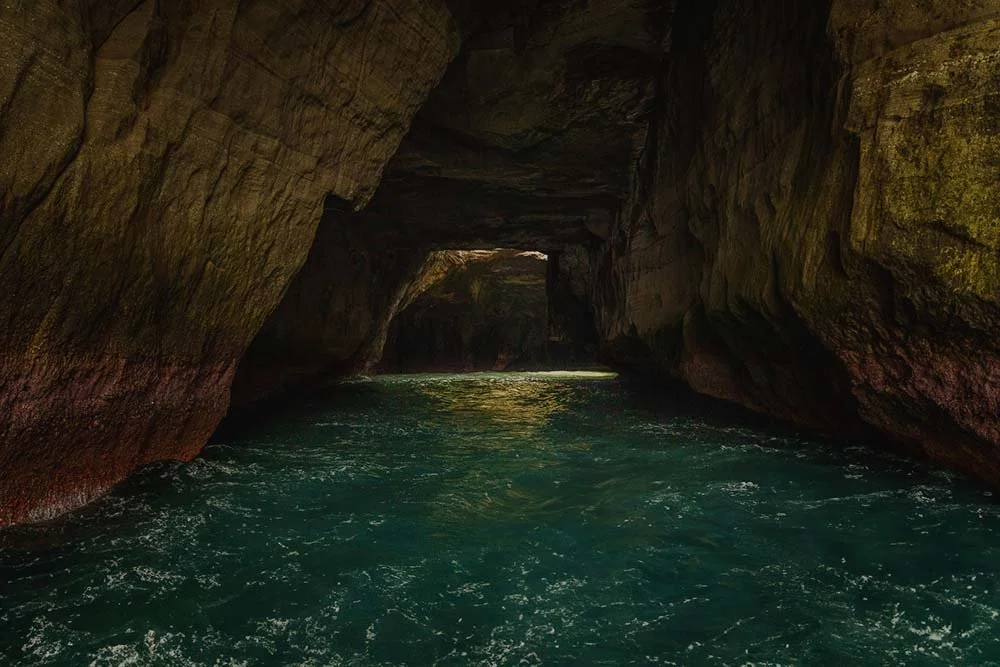
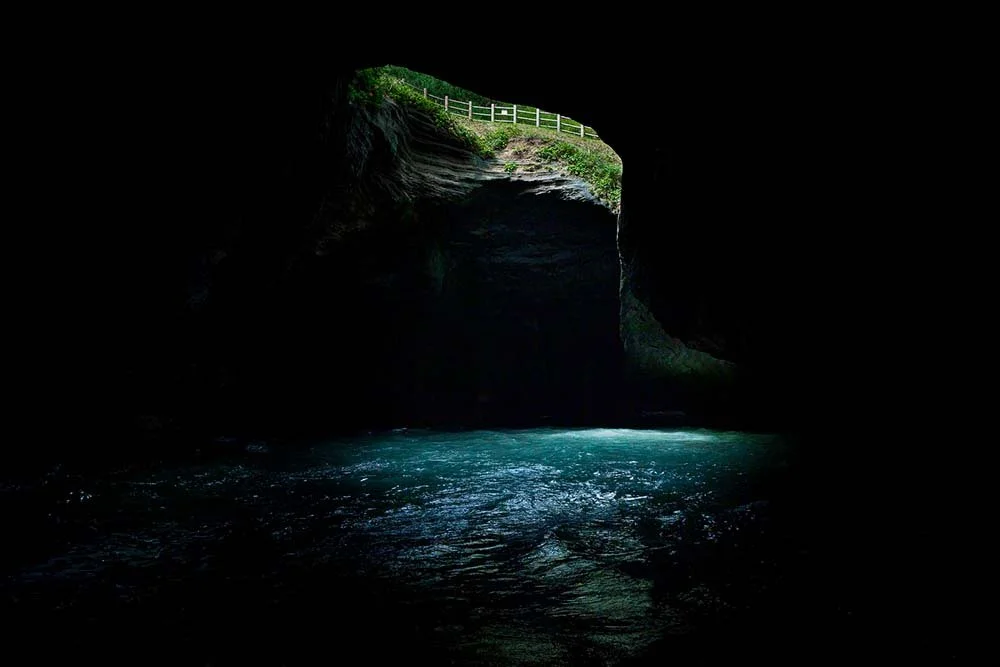
The coasts of the Izu Peninsula, part of the UNESCO Global Geopark, are characterized by imposing sea grottoes and caves that the Pacific Ocean has carved into the volcanic rock. These fascinating formations not only offer an impressive backdrop, but are also a popular photo subject. They can be admired and explored from both the inside and outside.

Dreamy Beaches and Rugged Coasts

Between Wasabi and Rice Terraces
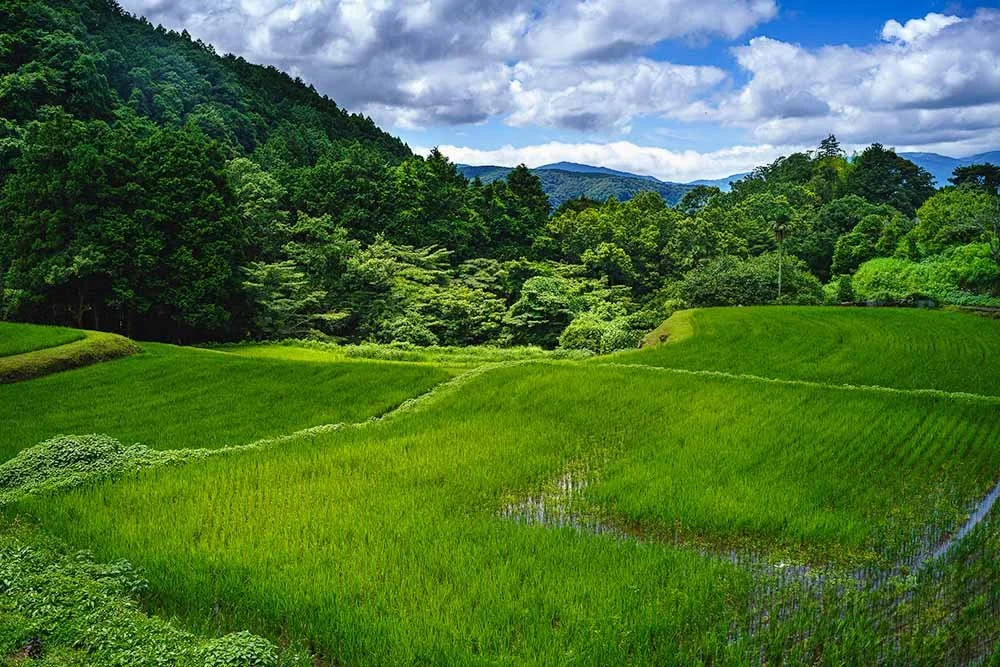
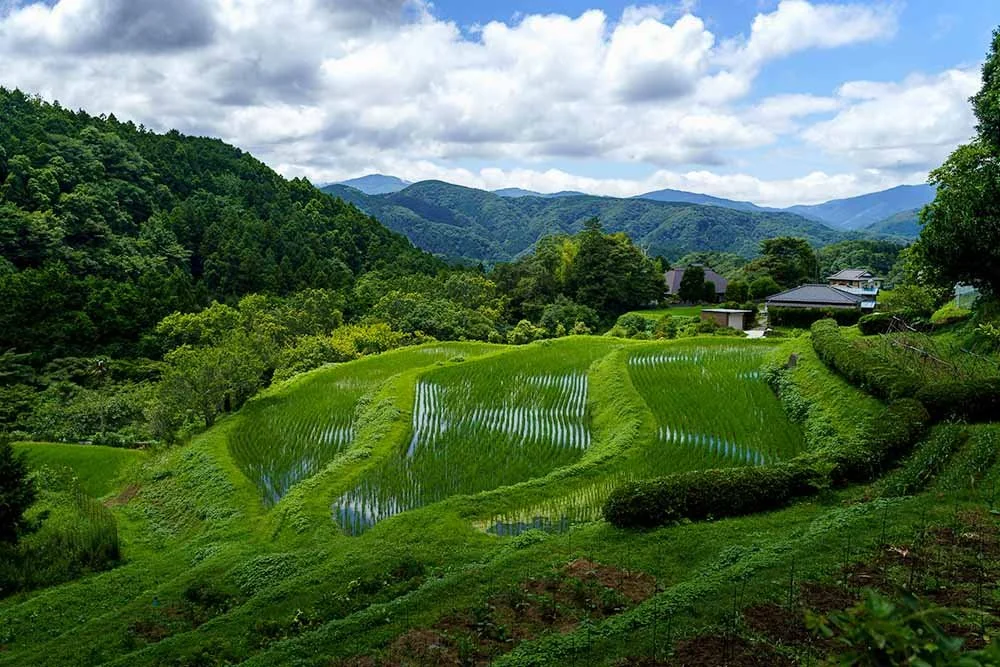
Landscape photographers will be rewarded with fantastic subjects on Izu: wasabi and picturesque rice terraces offer great photo opportunities. Typically, images of rice terraces are more familiar from other Asian countries, like Vietnam. However, on the Izu Peninsula, there is such various natural beauty that even after a three-week stay, the photographic possibilities are far from exhausted.